Artificial intelligence is no longer just a technology upgrade. It is changing how organizations make decisions, manage operations, serve customers, and create business value. However, many companies are discovering that adopting AI tools is not the hardest part of transformation.
The real challenge is AI governance.
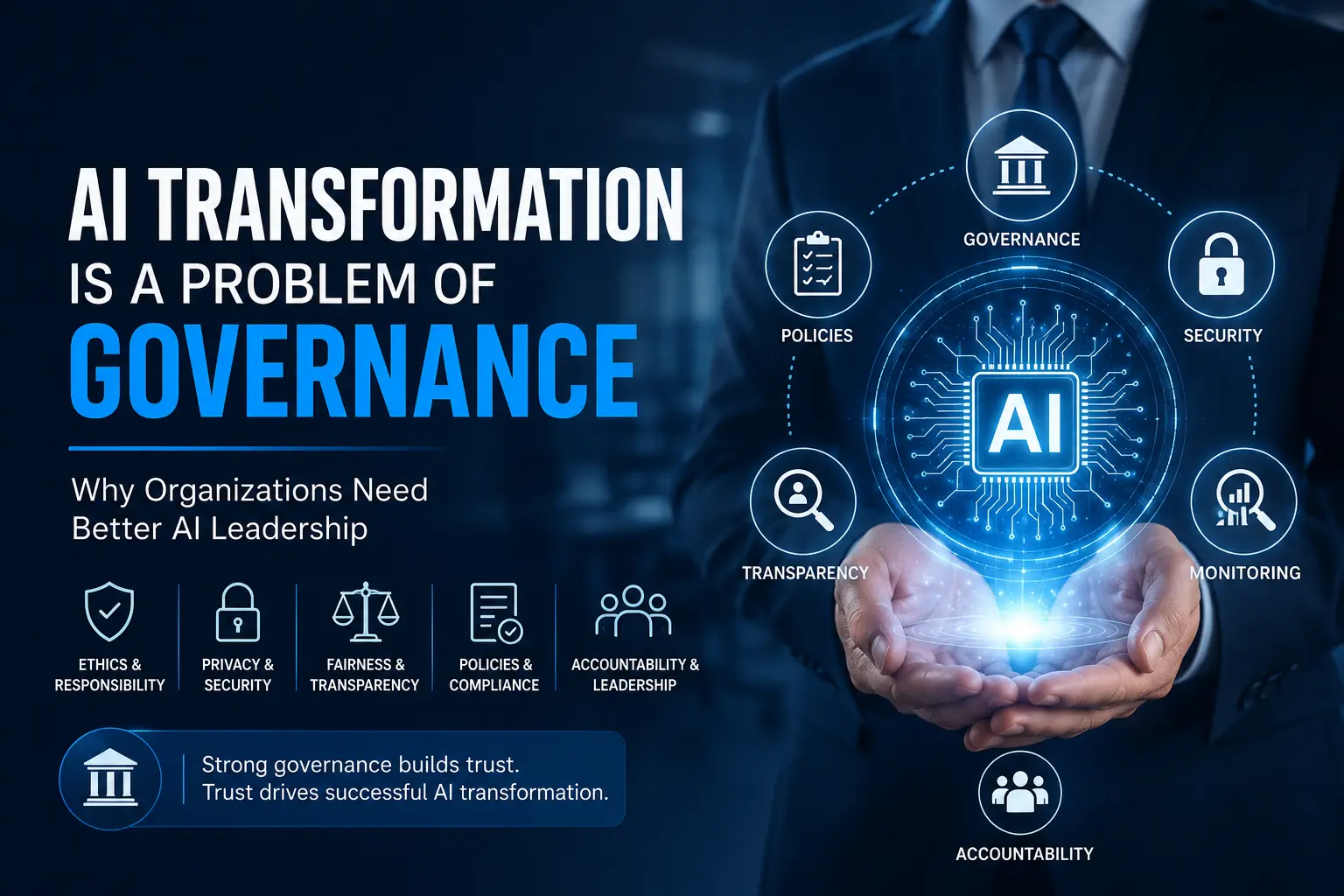
AI transformation is a problem of governance because successful AI adoption requires more than advanced algorithms or powerful systems. Organizations need clear policies, responsible leadership, ethical frameworks, data management strategies, and accountability structures to ensure AI delivers sustainable value.
Without proper governance, AI implementation can create risks related to data privacy, security, compliance, bias, and poor decision-making. Companies that focus only on AI technology without building governance foundations may struggle to achieve long-term success.
What Does AI Transformation Really Mean?
AI transformation is the strategic adoption of artificial intelligence across an organization to improve how it operates, makes decisions, and delivers value. It is more than implementing AI tools or automating routine tasks, it involves rethinking business processes, reshaping workflows, and embedding AI into long-term business strategy to drive meaningful change.
A successful AI transformation involves:
- Redesigning business workflows with AI capabilities
- Improving decision-making through data-driven insights
- Automating repetitive tasks
- Developing AI-powered products and services
- Creating new ways of delivering customer value
However, AI transformation is not only a technology project. It is an organizational change that affects people, processes, and business models.
This is why governance becomes a central issue.
Why AI Transformation Is Mainly a Governance Challenge
Many organizations assume AI success depends on choosing the right models, platforms, or tools. While technology matters, governance determines whether AI is implemented responsibly and effectively.
AI systems influence important decisions, from hiring and financial approvals to healthcare recommendations and customer experiences. These decisions require oversight, transparency, and accountability.
Governance provides the structure needed to answer important questions:
- Who is responsible when AI makes a mistake?
- How should organizations protect sensitive data?
- How can businesses prevent AI bias?
- What rules should guide AI usage?
- How can companies measure AI performance and risks?
Without clear answers, AI transformation becomes difficult to manage.
The Role of AI Governance in Business Transformation
AI governance is the set of policies, standards, and decision-making practices that help organizations develop, deploy, and manage artificial intelligence responsibly. It establishes clear rules, accountability, and oversight to ensure AI systems remain ethical, compliant, secure, and aligned with business objectives.
Effective AI governance helps companies balance innovation with responsibility.
A strong AI governance framework usually includes:
1. Clear AI Strategy and Leadership
AI projects often fail because organizations lack a clear vision. Different departments may experiment with AI tools without coordination, creating inconsistent results.
Strong leadership ensures that AI initiatives align with business goals.
Organizations need decision-makers who understand:
- Where AI creates real value
- Which problems AI should solve
- How AI investments support company objectives
- What risks need to be controlled
AI transformation requires leadership, not just technology adoption.
2. Data Governance and Quality Management
AI systems depend heavily on data. Poor-quality or unmanaged data can lead to inaccurate results and unreliable decisions.
Data governance ensures organizations have:
- Accurate and clean datasets
- Proper data ownership
- Secure data storage
- Privacy protection measures
- Controlled data access
A company cannot build trustworthy AI without trustworthy data.
This is why data governance has become a critical part of enterprise AI transformation.
3. Responsible AI and Ethical Decision-Making
AI can create significant opportunities, but it can also introduce ethical challenges.
Responsible AI focuses on developing systems that are:
- Fair
- Transparent
- Explainable
- Secure
- Accountable
For example, an AI hiring system should not unfairly reject candidates based on biased historical data. A financial AI model should provide understandable reasons behind important decisions.
Ethical AI practices help organizations build trust with customers, employees, and stakeholders.
AI Without Governance Creates Business Risks
Organizations that adopt artificial intelligence without proper governance may face several challenges.
Lack of Transparency
Many AI models work like complex “black boxes,” making it hard for users to understand how they reach their decisions or generate specific outcomes.
This creates problems when organizations need explanations for AI-driven outcomes.
Security and Privacy Concerns
AI systems often process large amounts of sensitive information. Weak security practices can expose businesses to cyber threats and regulatory penalties.
Compliance Problems
Governments and regulatory bodies are introducing new AI regulations focused on responsible AI usage.
Companies without governance frameworks may struggle to meet compliance requirements.
Poor Adoption Across Teams
Employees may resist AI adoption if they do not understand how systems work or how AI affects their roles.
Effective governance includes communication, training, and change management.
The Importance of AI Governance Frameworks
An AI governance framework provides organizations with a structured approach to managing artificial intelligence.
A practical framework should cover:
AI Policies
Organizations need clear guidelines about acceptable AI usage, security standards, and ethical requirements.
Risk Management
Businesses should identify possible AI risks before deploying systems.
Human Oversight
AI should support human decisions, not replace accountability.
Performance Monitoring
AI systems require continuous evaluation to ensure they remain accurate and effective.
Regulatory Alignment
Companies must ensure AI applications follow industry standards and legal requirements.
Why Companies Need AI Leadership, Not Just AI Tools
The rapid growth of generative AI has made powerful tools available to almost every organization. However, access to AI does not guarantee transformation.
Many companies purchase AI platforms but fail to achieve meaningful results because they lack:
- AI governance strategies
- Skilled leadership
- Employee training
- Data management practices
- Long-term planning
The organizations that succeed with AI are not necessarily those with the most advanced technology. They are the ones that manage AI responsibly.
AI Transformation Requires a Human-Centered Approach
Although artificial intelligence is based on technology, successful transformation depends on people.
Employees need to understand how AI can improve their work instead of viewing it only as automation.
A human-centered AI strategy focuses on:
- Employee education
- Collaboration between humans and machines
- Ethical decision-making
- Improving customer experiences
- Creating sustainable business value
Governance ensures that AI remains aligned with human goals.
How Organizations Can Build Better AI Governance
Companies beginning their AI journey should focus on practical governance steps.
Create an AI Governance Team
A dedicated team can oversee AI projects, manage risks, and ensure alignment with company goals.
Define AI Usage Policies
Clear internal policies help employees understand how AI tools should be used safely.
Improve Data Management
Organizations should invest in data quality, security, and accessibility.
Monitor AI Systems Continuously
AI models can change over time. Regular monitoring helps identify performance issues and risks.
Encourage AI Awareness
Training employees creates a culture where AI is adopted responsibly.
Why AI Transformation Is a Problem of Governance for Long-Term Success
Artificial intelligence will continue transforming industries, but technology alone will not determine success.
The future belongs to organizations that understand AI transformation as a governance challenge. Businesses need responsible leadership, strong data practices, ethical standards, and effective decision-making structures.
AI governance should not be viewed as a barrier to innovation. Instead, it provides the structure organizations need to develop, deploy, and scale AI with confidence, responsibility, and reduced risk.
Companies that build governance into their AI strategies will be better prepared to capture AI opportunities while reducing risks.
Final Thoughts
AI Transformation Is a Problem of Governance because lasting success with AI depends on far more than adopting the latest technologies. Organizations must establish strong leadership, clear governance policies, ethical standards, and reliable data practices to ensure AI delivers measurable business value.
Rather than viewing governance as an obstacle, businesses should see it as the foundation for responsible AI adoption. A well-defined governance framework helps organizations build trust, reduce risks, meet compliance requirements, and scale AI initiatives with confidence.
As AI continues to reshape industries, the organizations that succeed will be those that recognize AI Transformation Is a Problem of Governance and make responsible oversight a strategic priority. By embedding governance into every stage of their AI journey, businesses can unlock innovation while maintaining security, accountability, and long-term sustainable growth.
FAQs
1. Why is AI transformation considered a governance problem?
AI transformation requires policies, leadership, risk management, and accountability. Without governance, organizations may face ethical, security, and operational challenges.
2. What is AI governance?
AI governance is a framework of rules, processes, and controls that ensures artificial intelligence is used responsibly, securely, and effectively.
3. Can companies succeed with AI without governance?
Companies may adopt AI tools without governance, but long-term success becomes difficult due to risks related to data quality, compliance, and trust.
4. What are the main components of AI governance?
Key components include AI strategy, data governance, ethical AI practices, risk management, human oversight, and compliance monitoring.
5. How does AI governance improve business performance?
Strong AI governance helps organizations reduce risks, improve AI reliability, increase adoption, and create sustainable business value.